
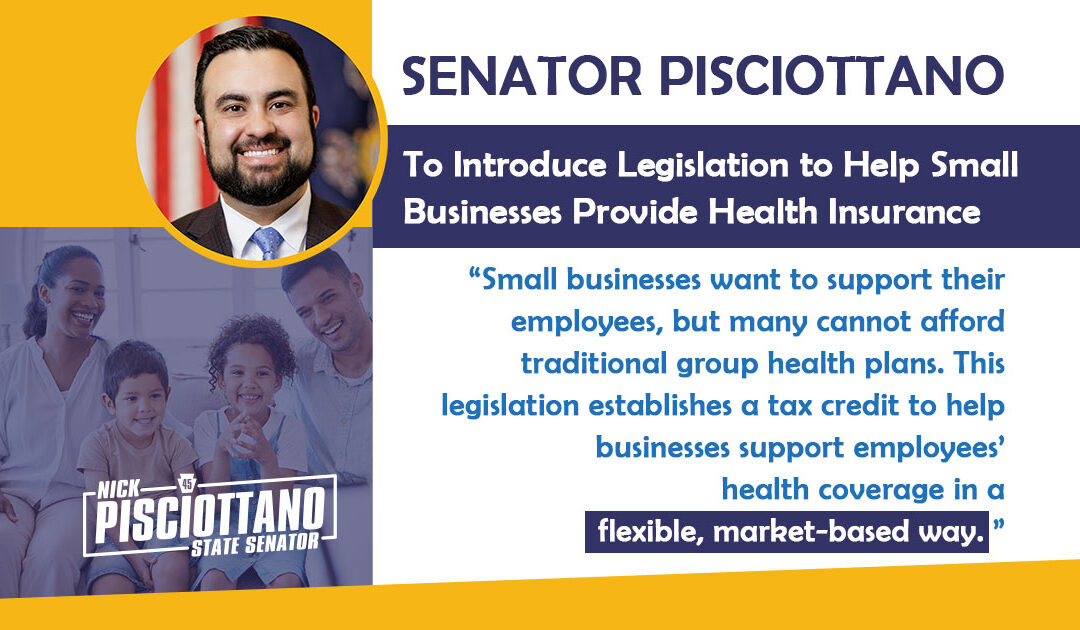
Monroeville, PA – State Senator Nick Pisciottano (D-Allegheny) has circulated a co-sponsorship memo for legislation that would establish a tax credit for small businesses to contribute to their employees’ health insurance premiums, helping more working Pennsylvanians access affordable coverage.
The proposal comes after enhanced federal Affordable Care Act premium tax credits expired at the end of 2025, increasing health insurance costs for many families and contributing to a sharp rise in uninsured rates across Pennsylvania and the nation. More than 130,000 Pennsylvanians enrolled through PENNIE, the Commonwealth’s health insurance marketplace, have already made the difficult decision to drop their coverage for 2026, with additional coverage losses expected in the coming months.
Senator Pisciottano said the legislation is part of a broader effort to address rising health care costs and respond to recent federal policy changes that have increased the number of uninsured Pennsylvanians.
“Too many working families are struggling to keep their health insurance coverage as costs continue to rise,” Senator Pisciottano said. “Small businesses want to support their employees, but many cannot afford traditional group health plans. This legislation establishes a tax credit to help businesses support employees’ health coverage in a flexible, market-based way.”
The legislation, which will be introduced as a Senate companion to a forthcoming House bill sponsored by Representatives Steve Samuelson (D-Northampton), Arvind Venkat (D-Allegheny), and Jen Mazzocco (D-Allegheny), would establish a tax credit for businesses with 50 or fewer employees that contribute to workers’ health insurance premiums through an Individual Coverage Healthcare Reimbursement Arrangement (ICHRA) for plans purchased through PENNIE.
Under an ICHRA, employers provide employees with pre-tax funds that can be used to purchase individual health insurance coverage, offering small businesses a flexible and affordable alternative to traditional group health plans. Employees can then use those funds to purchase coverage through PENNIE, where eligibility is reviewed to determine whether an employee would benefit more from employer assistance or existing premium tax credits.
The approach reflects a bipartisan response as states search for ways to address rising uninsured rates and help workers who do not have access to traditional employer-sponsored insurance. Supporters say the proposal offers a market-oriented way to expand access to health coverage by helping small businesses contribute toward employees’ insurance costs rather than creating a new government-run program.
Similar proposals have already been enacted or introduced in Republican- and Democratic-led states, including Indiana, Mississippi, Ohio, Connecticut, and Arizona.